The ark encounter functions as one of the most ambitious religious and educational attractions ever constructed in the modern world. Combining monumental architecture, immersive exhibits, and a literal interpretation of ancient biblical stories, the Ark Encounter has grown to be a focal point of global attention. Admired by supporters for its scale and craftsmanship and debated by critics for its ideological stance, the attraction occupies a unique space at the intersection of faith, tourism, education, and civic discourse.
This article provides a complete, in-depth examination of Ark Encounter, covering its origins, design philosophy, creators, visitor experience, cultural meaning, and permanent impact. Written in a refined, encyclopedic style, it is designed to inform readers thoroughly while retaining clarity, authority, and engagement.
What Is Ark Encounter?
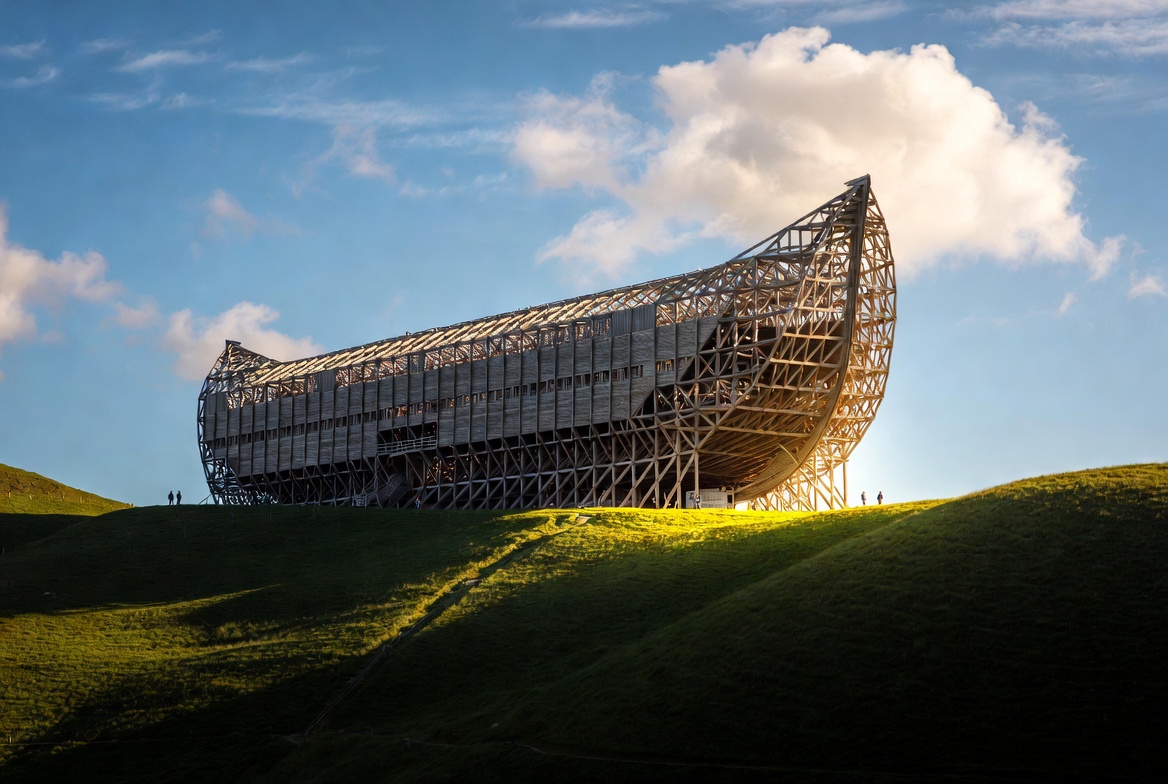
Ark Encounter is a large-scale religious theme park centered on a full-size representation of Noah’s Ark as described in the Book of Genesis. Located in Williamstown, Kentucky, the attraction presents a young-earth creationist explanation of biblical history, stressing the literal accuracy of the Flood narrative.
At the heart of the ark encounter is a colossal wooden structure built to the dimensions specified in scripture, intended to demonstrate how such a vessel could have been constructed and functioned. Surrounding exhibits explore theological explanations, historical interpretations, and modern applications of scriptural teachings.
In contrast to traditional museums, Ark Encounter is designed as an interactive experience, guiding visitors through a narrative journey instead than presenting neutral academic debate.
The Vision Behind Ark Encounter
The concept of ark encounter emerged from a desire to create a physical, walk-through representation of the biblical Ark that could engage modern audiences. The project was envisioned not simply as a tourist attraction but as a statement of belief expressed through architecture and storytelling.
Supporters viewed the ark encounter as a response to secular interpretations of history, striving to provide an alternative framework founded in scripture. The goal was to combine visual impact with educational content, encouraging visitors to reconsider old writings through a literal lens.
From its earliest planning stages, Ark Encounter was intended to be bold, unapologetic, and unmistakably faith-driven.
Biography Table: Key Figures Behind Ark Encounter
| Ken Ham | Founder and Visionary Leader | Christian author and speaker known for creationist teachings | Conceived the idea, guided theological direction, and served as public face |
| Mark Looy | Co-Founder | Ministry executive and writer | Assisted in project development and organizational leadership |
| Doug Henderson | Project Manager | Construction and logistics specialist | Oversaw large-scale planning and execution |
| Tim Lovett | Designer | Exhibit design professional | Developed interior layouts and educational displays |
This leadership structure ensured that Ark Encounter remained consistent in both message and execution throughout its development.
Architectural Scale and Design
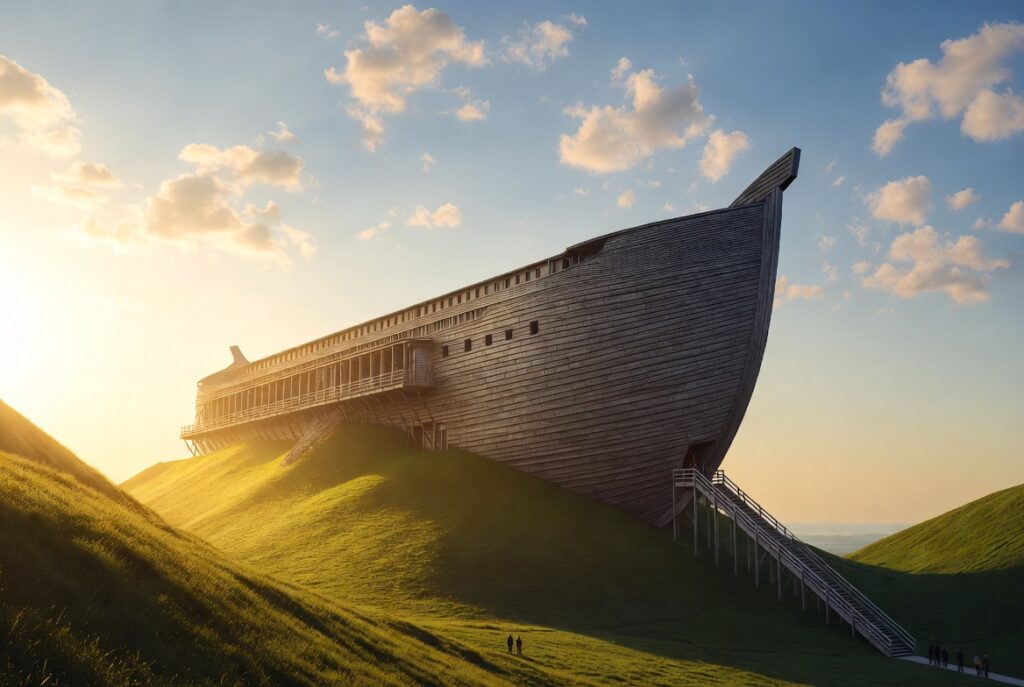
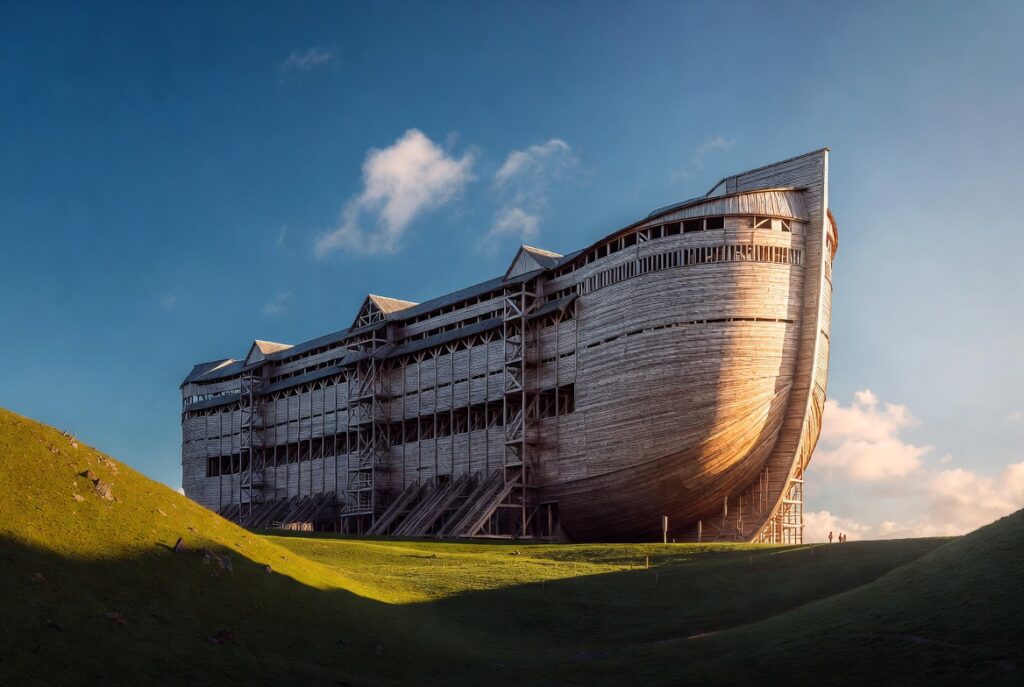
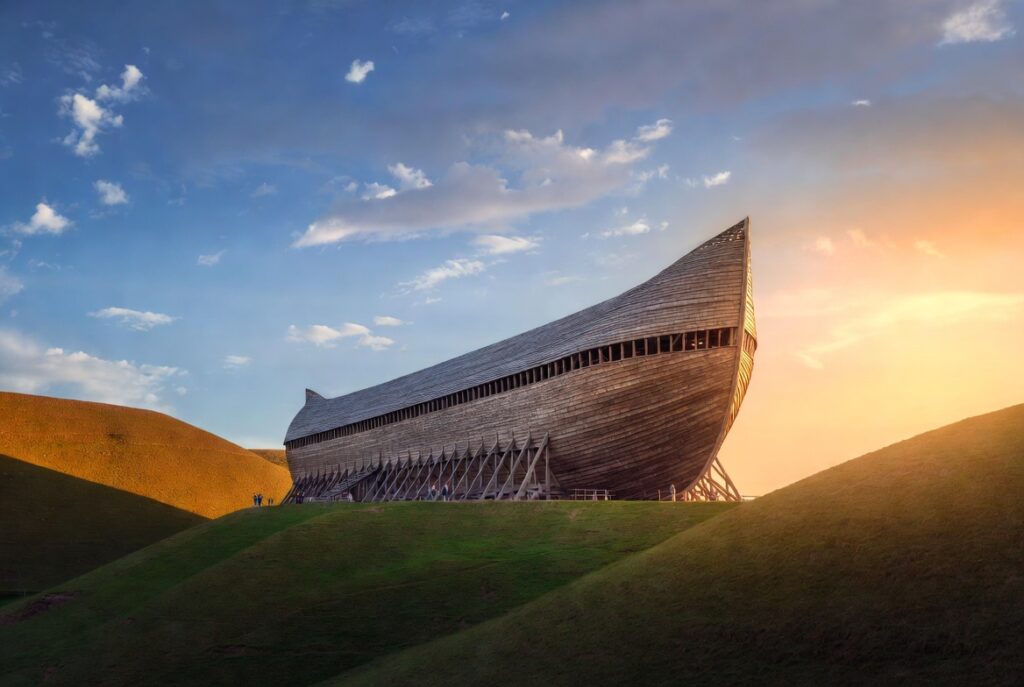
The physical presence of the ark encounter is its most striking feature. Measuring approximately 510 feet long, 85 feet wide, and 51 feet high, the structure is one of the largest timber-frame constructions in the world.
The design intentionally balances ancient inspiration with modern engineering. While the exterior maintains a historical appearance, the internal framework contains up-to-date safety standards, climate control systems, and structural supports.
Materials were selected for durability and genuineness, with an emphasis on natural wood tones that conjure antiquity. The result is an imposing yet carefully crafted structure that dominates the surrounding landscape.
Interior Layout and Exhibits
Inside the ark encounter, visitors progress through multiple decks, each focusing on a distinct theme. The layout is linear and story-driven, leading guests step by step through the story of Noah, the Flood, and its aftermath.
Key exhibit categories include:
- Living quarters illustrating family life aboard the Ark
- Animal enclosures demonstrating space management.
- Educational panels explaining construction methods
- Theological exhibits tackling common questions and criticisms
Every display within Ark Encounter is meant to reinforce the plausibility of the Ark narrative from a faith-based perspective.
Educational Philosophy
Education at Ark Encounter follows a specific interpretive framework founded in biblical literalism. Rather than presenting multiple viewpoints, the attraction emphasizes internal consistency within scripture.
Scientific concepts such as geology, biology, and anthropology are discussed through this lens, giving explanations that correspond with young-earth creationism. For supporters, this approach gives clarity and confidence. For critics, it elicits concerns about biased interpretation.
Regardless of perspective, Ark Encounter presents a integrated worldview, a key factor in its strong impact on visitors.
Cultural and Religious Importance
The Ark encounter occupies an important place in modern religious culture. It represents an effort to translate faith into physical form, using scale and spectacle to convey conviction.
For many visitors, the ark encounter is not simply an attraction but a pilgrimage-like experience. It reinforces belief, bolsters community identity, and offers a shared cultural reference point.
The attraction has also influenced how religious organizations engage public engagement, underscoring the power of immersive environments to shape perception and memory.
Public Reception and Attendance
Since its opening, Ark Encounter has drawn millions of visitors from around the world. Attendance spikes during holiday seasons and special events, indicating persistent interest beyond initial curiosity.
Supporters praise Ark Encounter for its workmanship, clarity of message, and family-friendly environment. Many visitors report feeling inspired and intellectually engaged.
Critics, on the other hand, question the project’s educational claims and public funding. This double reception has kept Ark Encounter in ongoing public discussion.
Economic Impact
The economic effect of Ark Encounter reaches well past its gates. The attraction has contributed to regional tourism growth, job creation, and infrastructure expansion.
Local businesses, hotels, and service providers have benefited from increased visitor traffic. In this sense, ark encounter functions not only as a cultural site but also as an economic engine.
Its success has demonstrated how niche attractions, when executed at scale, can reshape local economies.
Controversies and Debates
Few attractions have generated as great debate as the Ark Encounter. Discussions related to science education, religious freedom, and public incentives have accompanied the project since its inception.
Critics claim that ark encounter promotes a narrow interpretation of history, whereas supporters defend its right to present a faith-based perspective. These debates have played out in the media, academia, and public forums.
Rather than diminishing interest, controversy has arguably amplified the visibility of the ark encounter, reinforcing its role as a societal flashpoint.
Visitor Experience and Atmosphere
Walking through Ark Encounter is designed to be immersive and contemplative. Lighting, sound design, and spatial organization work together to create a solemn, reflective mood.
The sheer scale of the structure encourages awe, while detailed exhibits invite careful observation. The experience is intentionally paced, allowing visitors to absorb information gradually.
For many, the ark encounter creates a lasting impression precisely because it engages both intellect and emotion.
Long-Term Legacy
The long-term significance of the ark encounter rests in its capacity to sustain relevance. Since debates about faith, science, and education continue, the attraction is still a physical symbol of these conversations.
Regardless of whether it is viewed as an architectural icon, a religious statement, or a societal experiment, the ark encounter has secured a permanent place in modern discourse.
Its heritage will likely be measured not only by visitor numbers but by its influence on how belief systems are expressed in public spaces.
Deduction
Ark encounter is far more than a large wooden structure. It is a carefully designed narrative environment that reflects deeply held beliefs, ambitious design, and calculated storytelling. Through its scale, detail, and clarity of purpose, Ark Encounter has achieved something rare: it has transformed an ancient story into a contemporary experience that continues to stimulate thought, admiration, and debate.
For readers trying to understand the attraction in its entirety, Ark Encounter affords a compelling case study of how faith, culture, and architecture intersect in the modern world.