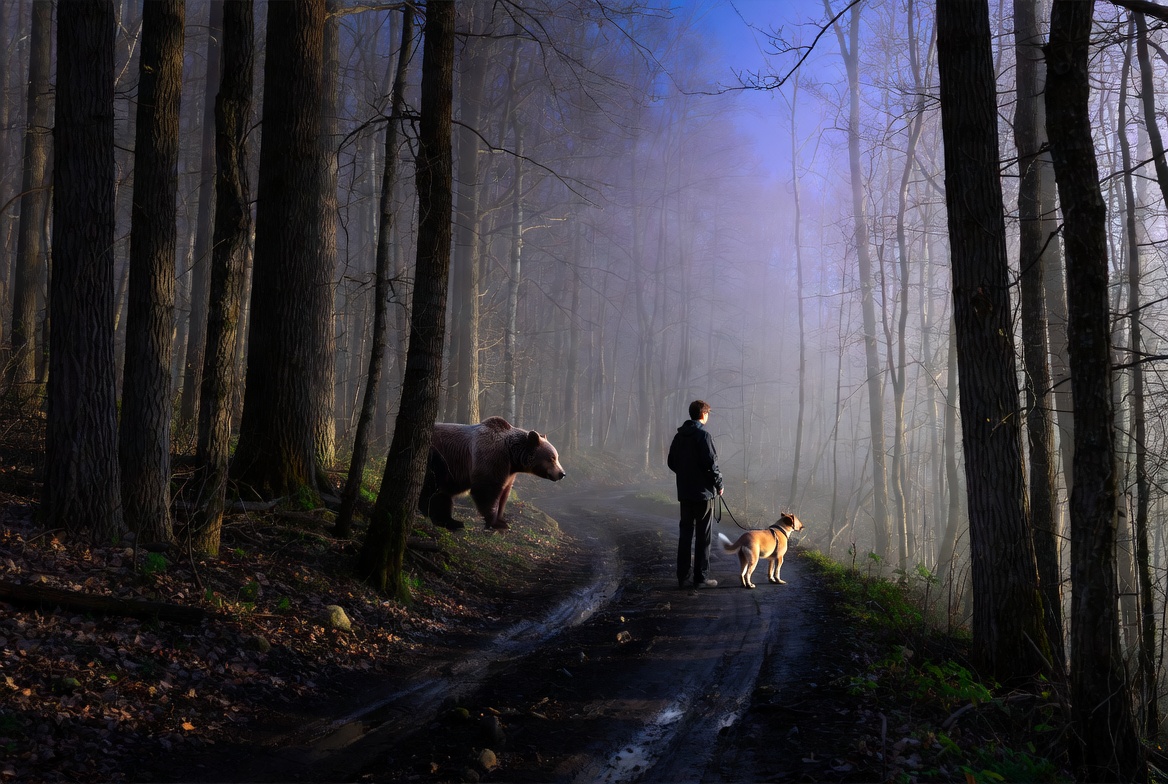
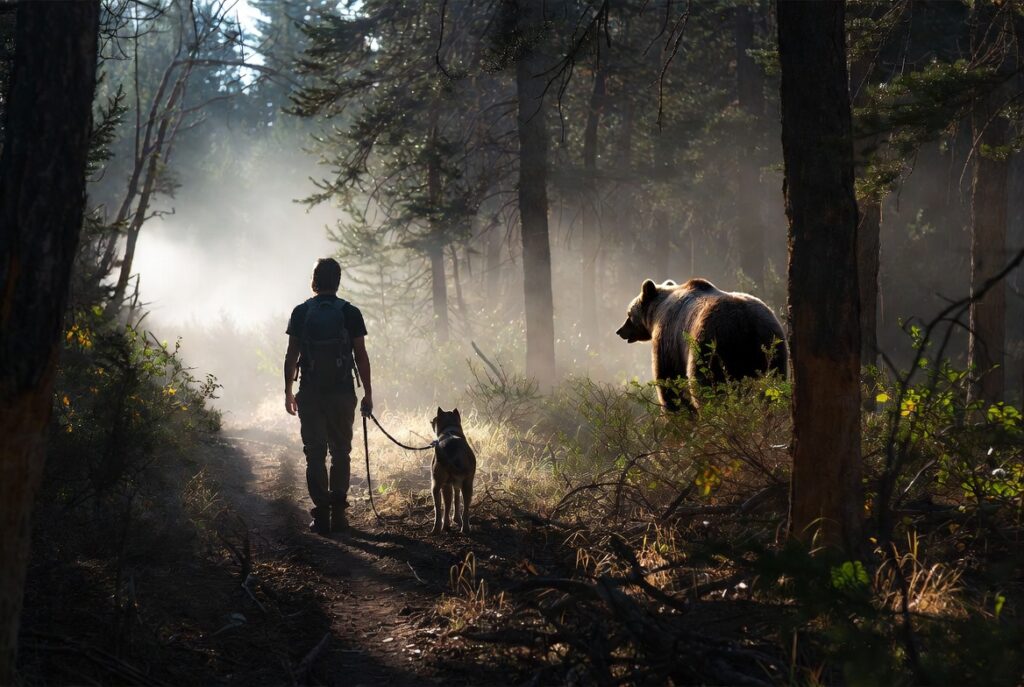
The phrase grizzly bear dog walker encounter has emerged as a powerful symbol of the fragile boundary between human activity and wild ecosystems. Such encounters are not merely dramatic wildlife stories; they are complex events shaped by ecology, behavior, human decision-making, and chance. Understanding these incidents requires more than fear-driven headlines. It demands context, biological insight, and thoughtful analysis.
This article presents a comprehensive, professional exploration of the grizzly bear dog walker encounter, examining how and why these encounters occur, what they reveal about grizzly behavior, the role of domestic animals, and the broader lessons for people who live, work, or recreate near bear habitat.
Understanding the Grizzly Bear’s Natural Domain
Grizzly bears are among the most powerful terrestrial mammals in North America. Their historical range once stretched across vast regions of the continent, and although modern populations are more fragmented, their instincts remain deeply rooted in survival and territorial awareness.
A grizzly bear dog walker encounter often occurs not because a bear seeks conflict, but because humans unknowingly enter critical zones such as feeding areas, travel corridors, or protective spaces involving cubs or food caches.
Grizzlies rely heavily on scent, memory, and learned behavior. When unfamiliar stimuli—such as a barking dog or fast-moving human—interrupt their routines, their reactions can be immediate and defensive.
Why Dog Walkers Are Uniquely Vulnerable
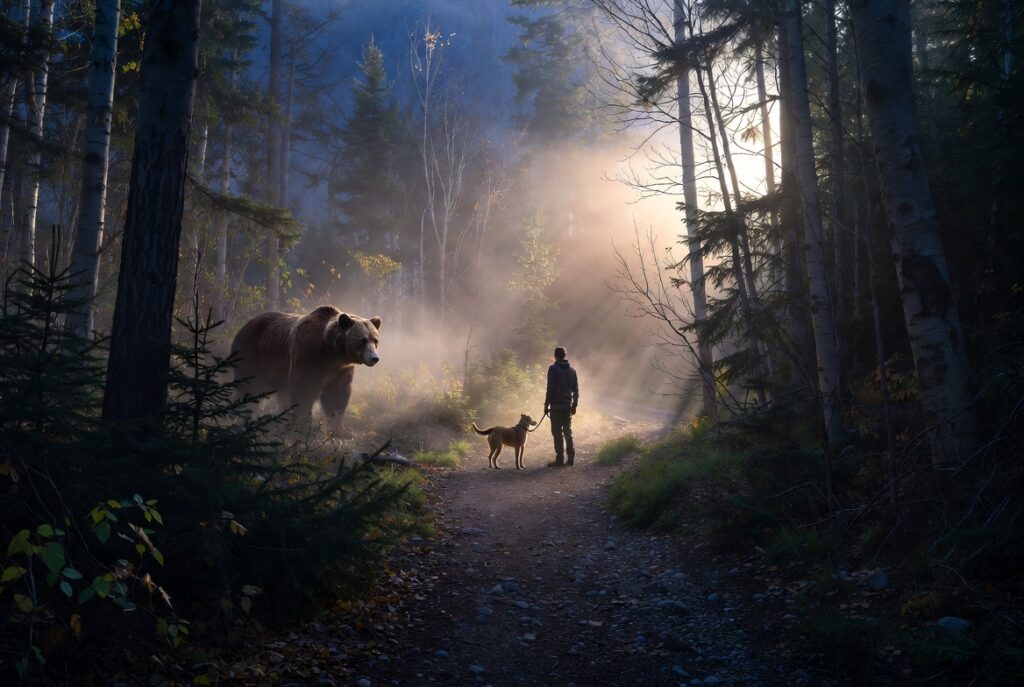
A grizzly bear dog walker encounter differs from encounters involving hikers or campers due to the presence of a dog. Dogs introduce unpredictability into wildlife interactions.
Several factors increase risk:
- Dogs may run ahead of their owners, startling a bear at close range
- Barking can trigger defensive or predatory responses
- Dogs may retreat toward their owner when frightened, bringing the bear closer
In many recorded cases of a grizzly bear dog walker encounter, the dog was off-leash, increasing the likelihood of sudden contact.
Behavioral Triggers Behind a Grizzly Bear Dog Walker Encounter
Not all encounters escalate to aggression, but when they do, specific triggers are often present.
Common contributing factors include:
- Surprise at close range
- Protection of cubs
- Defense of a food source
- Perceived pursuit caused by dogs
A grizzly bear dog walker encounter is rarely random. It is usually the result of overlapping movements between species whose survival strategies conflict.
Case Biography Table: Documented Grizzly Bear Dog Walker Encounter
The biography table below summarizes a representative grizzly bear dog walker encounter, structured for clarity and factual reference.
| Category | Details |
|---|---|
| Incident Type | Grizzly bear dog walker encounter |
| Location | Remote forest trail near mountainous terrain |
| Time of Day | Early morning |
| Human Activity | Recreational dog walking |
| Dog Status | Off-leash |
| Bear Condition | Adult female grizzly |
| Presence of Cubs | Suspected |
| Trigger Event | Dog ran ahead and barked |
| Bear Response | Defensive charge |
| Human Response | Attempted retreat |
| Outcome | Serious injuries, non-fatal |
| Environmental Factors | Dense vegetation, limited visibility |
| Primary Risk Factor | Sudden close-range encounter |
| Key Lesson | Leash control and situational awareness |
This biography-style documentation helps transform a grizzly bear dog walker encounter from a shocking story into a structured learning opportunity.
The Role of Habitat Overlap
Modern land use has dramatically increased overlap between humans and wildlife. Trails, rural developments, and recreational areas often intersect with bear habitat.
A grizzly bear dog walker encounter is frequently the byproduct of this overlap. Bears do not recognize property boundaries or designated trail systems. To them, these spaces are part of an ancient landscape mapped by instinct and seasonal memory.
Human Perception Versus Bear Reality
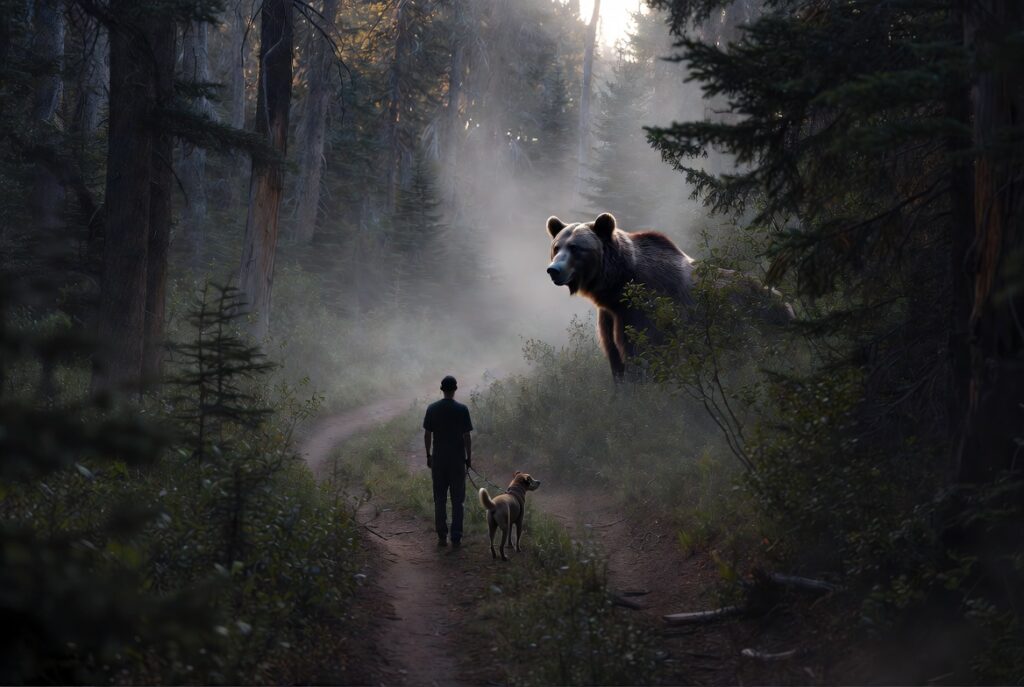
Humans often interpret a grizzly bear dog walker encounter as an act of aggression. From a biological standpoint, most such incidents are defensive reactions.
Grizzlies possess:
- Acute hearing
- Exceptional olfactory senses
- Rapid threat assessment instincts
When startled, a grizzly has only seconds to decide whether to flee, stand ground, or charge. Dogs complicate this decision-making process by introducing noise, movement, and perceived pursuit.
Psychological Impact on Survivors
Beyond physical injuries, a grizzly bear dog walker encounter can leave lasting psychological effects. Survivors frequently report heightened anxiety, avoidance of outdoor spaces, and recurring intrusive memories.
This emotional toll underscores the importance of preventive education rather than reactive storytelling.
Media Narratives and Public Misunderstanding
Media coverage often simplifies a grizzly bear dog walker encounter into a dramatic headline, stripping away ecological and behavioral nuance.
This approach can lead to:
- Unwarranted fear of wildlife
- Misplaced calls for bear removal
- Reduced public support for conservation
Accurate, balanced narratives are essential for fostering coexistence rather than conflict.
Preventive Strategies for Dog Walkers
Preventing a grizzly bear dog walker encounter begins with understanding responsibility in shared ecosystems.
Best practices include:
- Keeping dogs on a short leash
- Avoiding low-visibility areas
- Making controlled human noise
- Being alert to fresh tracks or scat
- Carrying deterrents where legal
A calm, prepared human presence significantly reduces the likelihood of escalation.
Environmental Ethics and Shared Responsibility
Every grizzly bear dog walker encounter raises ethical questions. Who bears responsibility when human recreation intersects with wildlife survival?
Ethical outdoor behavior acknowledges that humans are visitors in ecosystems shaped long before modern trails existed.
Lessons for Policy and Community Planning
Communities near bear habitat can reduce grizzly bear dog walker encounter incidents through:
- Clear trail signage
- Seasonal access restrictions
- Public education programs
- Leash enforcement policies
These measures protect both human lives and wildlife populations.
Why These Encounters Matter Beyond the Headlines
A grizzly bear dog walker encounter is not just an isolated event. It reflects broader themes of environmental pressure, human expansion, and the challenges of coexistence.
Each incident provides data that can inform safer practices, smarter policies, and deeper respect for wild spaces.
Deduction: Coexistence Is a Learned Skill
The grizzly bear dog walker encounter stands at the intersection of instinct and intention. Grizzlies act according to ancient survival codes; humans must learn to adapt behavior accordingly.
Education, humility, and preparedness are the true tools of safety. When humans acknowledge the realities of wildlife behavior, encounters become lessons rather than tragedies.
Understanding transforms fear into respect—and respect into coexistence.